
How to Inflate a Volleyball
A practical step-by-step guide to inflating a volleyball when small pressure changes make a big difference in feel.

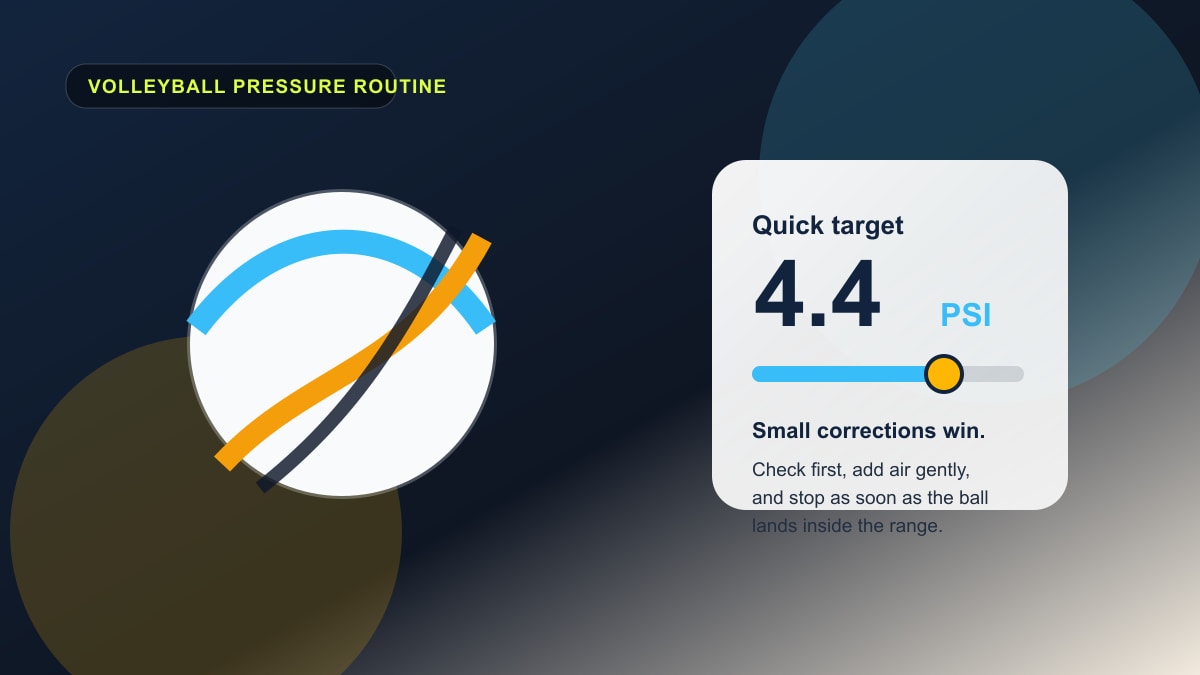
To inflate a volleyball well, start with the pressure range printed on the ball or the governing-body guidance that applies to your level, wet the needle, read the number before you add air, and correct in very small steps. Volleyball gives you less room for sloppy pressure changes than most other sports balls.
That is why the calm version of the routine matters. A volleyball that is only a little off can already feel harder, flatter, or less predictable than players expect.
Jump to a section
Volleyball gives you a smaller margin for error
Volleyball pressure is not the kind of job where people can keep pumping until the ball feels alive. Small changes show up quickly in the touch of the ball, which is why a digital reading or clear gauge matters so much.
That narrow range is why gentle corrections matter more than dramatic pumping.
The guidance printed on the specific ball should still be your first stop.
A small miss is easier to correct early than after players already feel it in drills.
For the official rule context, keep the current FIVB volleyball rules document and our volleyball PSI guide close by.
Use this simple volleyball inflation routine
1. Wet the needle before insertion
Volleyball valves deserve the same care as every other sports ball. A dry needle is a bad way to rush a narrow-pressure job.
2. Read the current pressure first
This keeps you from making a small volleyball correction feel larger than it really is.
3. Add air in short, controlled bursts
Volleyballs usually need smaller moves than people expect. Respect that before you chase the feel too aggressively.
4. Recheck and stop as soon as the ball is right
The extra recheck is worth it because volleyball punishes casual overshooting faster than most ball types.
What people miss when they pump up a volleyball
That usually pushes the ball out of the small range that makes touch and passing feel clean.
Volleyball rewards smaller adjustments and calmer checks.
Shape is a weak guide when the acceptable PSI window is so narrow.
You do not need to turn a small miss into another full pumping cycle.
Why volleyball is a strong case for a better pump
Volleyball is one of the clearest cases for a better pressure workflow because the adjustment window is tight and players feel the difference quickly.
That is why a pump with gauge or target pressure is far stronger than a basic top-off tool for school gyms, clubs, and families handling several volleyballs at once.
Before the next session, make the routine easy to repeat
Volleyball prep goes best when the number is written down, the pump stays in one obvious spot, and the next person can repeat the same check without a long explanation.
Keep this page beside the volleyball pump guide and the sports ball pressure chart if several people share the ball-prep job.
Author
Andre Carter
Youth sports coachAndre Carter is a privacy-protected TorrX contributor profile focused on youth sports routines, practice prep, and keeping balls ready for game day.