
How to Inflate a Football
A practical step-by-step guide to inflating a football without overshooting the range or turning game-ball prep into guesswork.

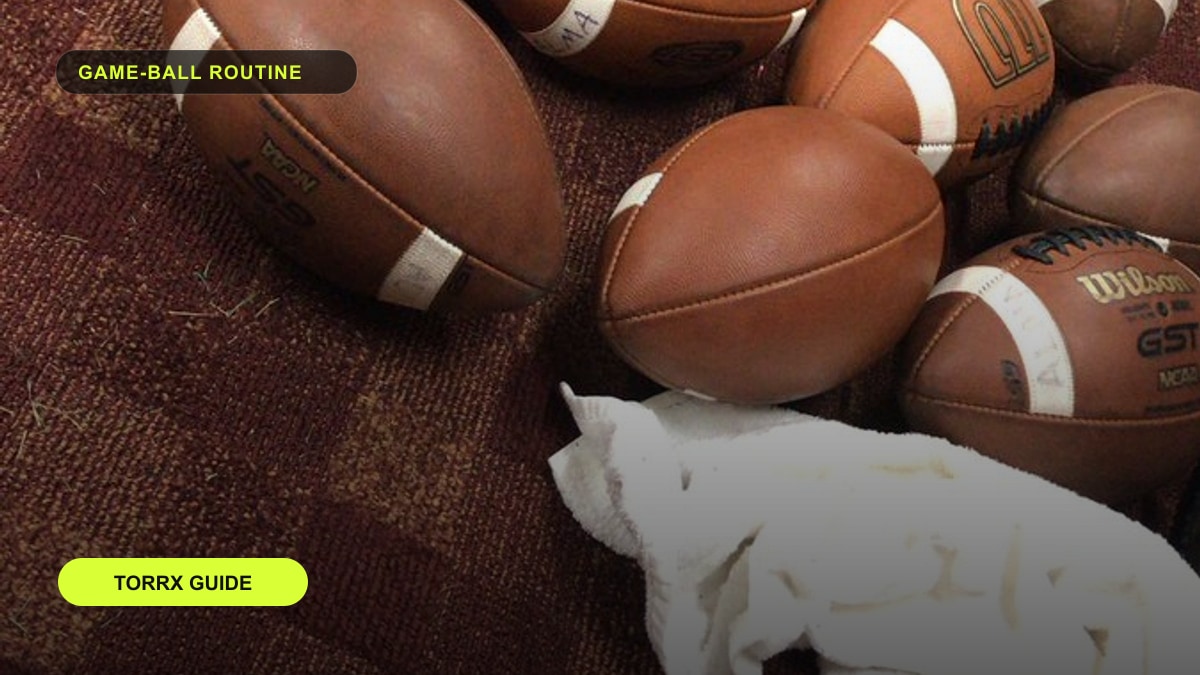
To inflate a football well, start with the rule range or printed guidance that applies to the ball in front of you, wet the needle, check the current pressure before adding air, then correct in small moves instead of pumping until the ball simply feels firm.
That routine matters because football prep goes wrong fast when the number gets treated like an afterthought. A football can feel solid in the hand and still miss the target your coach, camp, or rule set expects.
Jump to a section
Know the range before you add air
The cleanest starting point is the rule set or printed guidance that actually applies to the ball you are handling. High school, camp, and game-ball routines do not all live under the same assumptions.
This is a familiar football range, but your league, camp, or ball guidance should still win.
The problem is usually inconsistency, not lack of air in general.
Travel, storage, and weather can change a football more than people expect.
The NFHS authenticating-mark reference and our football PSI guide are a good pair when you need a quick rule check before practice or camp.
Use this clean football inflation routine
1. Wet the needle and insert it straight
Football valves deserve the same calm treatment as every other sports ball. A little moisture reduces friction and helps the needle slide in without forcing it.
2. Read the current pressure before you pump
This tells you whether the football needs a light correction or a real fill. Without that number, you are already guessing.
3. Add air in small moves and recheck
Footballs do not need dramatic bursts of air. Small corrections are easier to control, especially if several balls are waiting.
4. Stop when the ball reaches the chosen target
The goal is not the firmest possible football. The goal is the same football routine every time.
What coaches, parents, and camps usually get wrong
A football can feel strong in the hand while still missing the planned target by enough to matter.
That reverses the calm order of operations and makes overshoot much more likely.
A ball that sat in a hot car or cold shed may not behave like the ball you checked yesterday.
Letting a little air back out is often the right move, not a sign that something went wrong.
Why a pressure-capable pump makes football prep calmer
The bigger the bag or cart, the more useful a cleaner pressure routine becomes. A football pump with a gauge already helps. A target-pressure pump helps even more because it turns correction into a normal part of the job.
If you need the correction side of that process, the how to deflate a sports ball safely guide is the right companion page.
Before practice or game day, treat footballs like a short checklist
The best football-prep routine is short enough that it still happens on a busy day. Check the target, work through the bag in order, move corrected footballs to the ready side, and do one late recheck if weather or travel changed the setup.
That is also the best time to keep the football pump guide and the sports ball pressure chart nearby so the range, the tool, and the routine all point in the same direction.
Author
Daniel Park
Equipment room coordinatorDaniel Park is a privacy-protected TorrX contributor profile covering equipment room setup, pump storage, charging habits, and multi-sport ball care.