
Sports Ball Pressure Chart
A coach-friendly sports ball pressure chart for basketballs, soccer balls, volleyballs, and footballs, plus the caveats that matter in real prep.

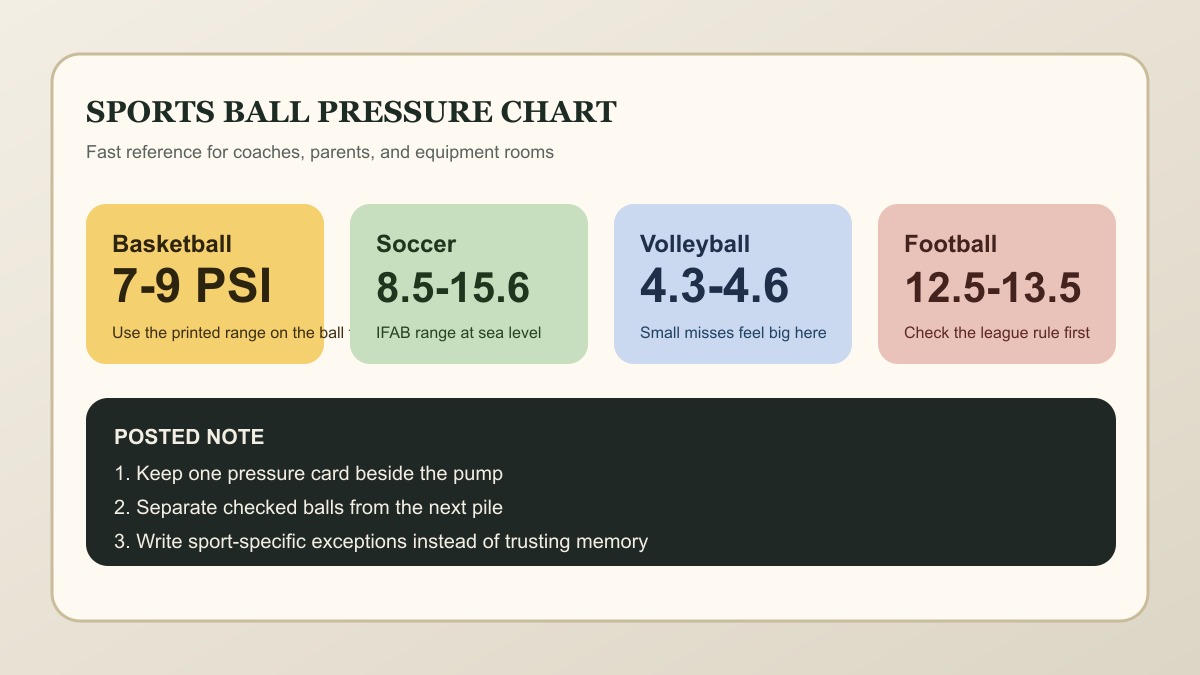
If you need one fast pressure reference for several sports, start with a chart. Then slow down long enough to confirm the printed range on the ball and the rule book for your level. That second step is what keeps a useful chart from becoming bad equipment-room folklore.
The practical goal is not memorizing numbers. It is giving coaches, parents, and equipment staff a clean reference they can actually use before practice, on the sideline, or beside a ball rack.
Jump to a section
Quick chart: start here, then confirm the ball
These are the ranges worth posting first. They are not a substitute for the label on the ball, but they are a much better starting point than squeezing the cover and guessing.
Use the printed range on the ball first. Basketballs do not share one universal official PSI target.
IFAB Law 2 lists 0.6 to 1.1 atmosphere at sea level, but the printed range on the ball still matters.
Indoor volleyball sits in a tight range, so small adjustments are noticeable.
Check your league rules first. High school and many football workflows live in this range.
If you want the deeper single-sport notes behind those numbers, keep the basketball PSI guide, soccer ball PSI guide, volleyball PSI guide, and football PSI guide close by.
Why the chart needs sport-specific caveats
A posted chart is useful only when the person reading it knows what still needs judgment. The job changes by sport.
Indoor, outdoor, youth, and game balls do not all behave the same way.
A soccer ball can look normal and still sit outside the right pressure range.
Players feel a half-PSI miss much faster on a volleyball than on most other balls.
Practice balls, school rules, and game-prep habits can change the target you post.
That is why a generic air-pump routine usually breaks down in shared team settings. The number is not enough. The setup has to tell people which number applies to which ball and when to recheck it.
Turn the chart into a usable team routine
A chart helps only if it is attached to a repeatable process. Keep the reference close to the pump, keep the ready balls separate from the check pile, and remove as many judgment calls as you can.
Do not make helpers remember numbers from a text thread or a coach's passing comment.
A boys' basketball, a youth soccer ball, and a varsity football should not share one unlabeled target list.
A ready pile and a check pile save more time than people expect once practice starts getting busy.
If one ball needs a special note, write it down so the next person does not reset it by accident.
The ball pressure log for teams and the equipment-room ball inflation system guide are the easiest follow-up reads if you are turning this chart into a posted station.
What people usually get wrong with pressure charts
They treat every basketball like the same ball
Basketball is the biggest trap here. One chart line can work as a fast reminder, but the printed range on the ball still needs the final say.
They trust shape more than pressure
Soccer balls and volleyballs can look close enough even when the number is off. That is why a digital reading or a real gauge matters.
They never update the posted note
Once a team switches ball models or a coach wants a different game-ball feel, the wall note has to change too. A stale chart creates the same confusion as no chart at all.
Pressure references worth keeping nearby
The official soccer pressure range reference for match balls under the Laws of the Game.
FIVB Official Volleyball Rules 2025-2028The current official volleyball rules document with the inside-pressure standard on the ball-specifications page.
NFHS Authenticating Mark Manual 2025A current official high school football reference that lists the regulation 12.5 to 13.5 PSI range.
Spalding: How to inflate a basketballA manufacturer guide that reinforces using a gauge, staying inside the printed range, and checking for leaks.
Pair those external references with the ball pressure gauge guide so the posted number is matched to a clean checking routine.
Author
Hannah Cole
Club soccer coachHannah Cole is a privacy-protected TorrX contributor profile covering field-sport ball pressure, sideline habits, and efficient club equipment routines.